
Car Lockout Kit Replacement Parts: What Wears Out and When to Reorder
Sturvo Editorial · August 25, 2026
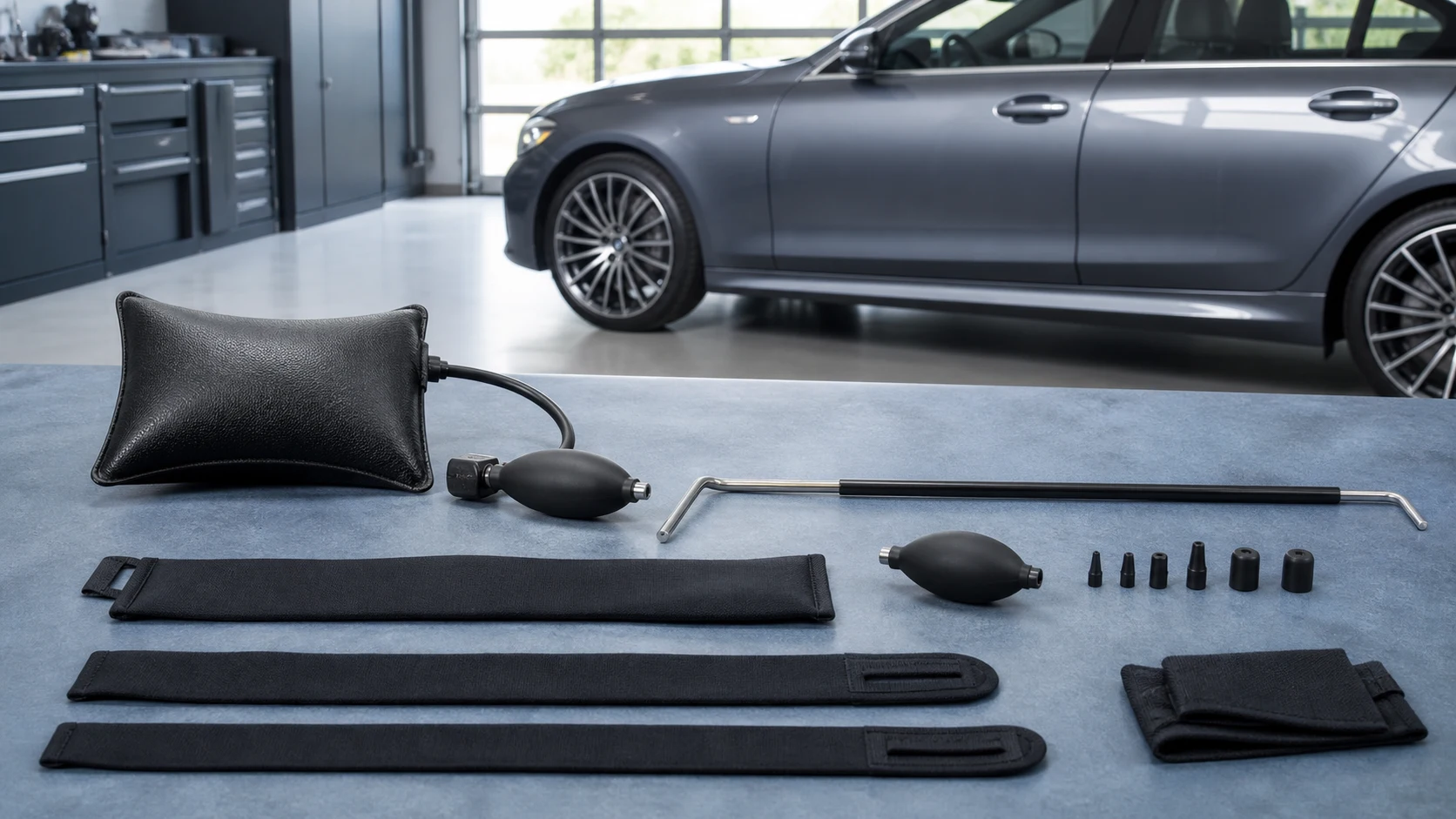
My air wedge gave up in a grocery store lot on a Tuesday. I pumped, it hissed, and the gap closed like the door was swallowing it. The keys were on the driver's seat, my ice cream was melting into the floor mat, and the tool I had trusted for two years was done. I got in that day with patience and a lucky angle on the unlock button. Then I went home and spread the whole kit on the garage floor. Half of it was fine. Half of it was one bad evening from failing me. Here is how to tell which half you have, and when a fresh kit beats a bag of tired parts.
How do you know a wedge is worn out?
Start with the tool that does the hardest work. The air wedge is a rubberized bladder with a pump bulb, and it lives a rough life: folded in a bag, baked in a trunk, then pumped tight against a door seal. Treat it as a wear item, closer to a bike tube than to a wrench.
Three signs tell you it is done. First, sound. Pump it to a firm gap and listen. A steady hiss means air is leaving through a seam or the valve, and a leaking wedge will shrink your working gap while your rod is inside the door. Second, feel. Creases that have gone stiff or pale along the fold lines are cracks waiting to open. Third, the valve. If you have to pinch the valve shut with a finger to hold pressure, the seal inside is gone.
You can test all of this at home in five minutes. Inflate the wedge, set it under a heavy book on a table, and walk away. Come back in ten minutes. If the book has settled, the wedge has a leak, and it will pick the worst possible night to show you.
Which pieces wear out first?
Not every part ages at the same speed. Here is the honest order, based on what actually touches the car.
| Part | What wears on it | Keep or replace |
|---|---|---|
| Air wedge | Seams, valve, fold cracks | Replace at first leak |
| Pump bulb | Stiff or cracked rubber | Replace with the wedge |
| Long reach rods | Bent sections, stripped threads | Replace bent pieces |
| Rubber sleeves | Splits, missing chunks | Replace, they protect paint |
| Plastic pry tools | Chipped or sharpened tips | Replace when edges turn sharp |
| Carry bag | Zipper, torn seams | Replace when pieces fall out |
Rods bend when someone pushes sideways instead of along the door, and a bent rod is not a cosmetic problem. A curve at the joint sends the tip somewhere you did not aim it, which is how people snag wiring or a window track. If two sections no longer screw together smoothly, the threads are done, and no amount of force makes them safe again.
The plastic pry tools are the quiet ones. They are meant to be softer than your trim, so they chip on purpose instead of scratching the car. Once a tip chips into a sharp edge, the math flips and the tool becomes the thing that scratches. That is the moment to retire it.
Can you buy single replacement parts, or is a new kit smarter?
Single parts exist. Professional suppliers sell individual air wedges, replacement bulbs, and separate long reach tools, and a pro-grade contractor kit can run well over a hundred dollars. If you own pro gear, part-by-part replacement makes sense because each piece costs real money.
Consumer kits play by different math. The Sturvo 27 PCS kit runs about $33 for the whole bag. A single off-brand wedge plus shipping can eat half of that, and then you are gambling on whether its thickness seats in your door gap the way the old one did. Rods are worse. Thread sizes and fittings are not standardized across brands, so a random replacement section may not screw into what you already own.
The practical rule: one cheap wear item, like sleeves or a pry tool, is worth a small patch order if you can match it. Two or more worn pieces, or anything wrong with the rods, and a fresh kit usually costs less than the scavenger hunt. You also get a new bag, which matters more than it sounds, because a bag with a dead zipper is how pieces go missing in the first place.
Who ends up buying the second kit?
Almost nobody buys a second kit because they love shopping for lockout tools. The reorder usually has a trigger, and the trigger is usually a person with a specific job.
A fleet lead is the classic one. Picture someone running six service vans for an HVAC company. Drivers lock keys in vans often enough that it became a line item, so the first kit paid for itself in one saved service call. Two years later the wedges are tired from real use, and the reorder is not a question of if, just of how many. Same tools, same vans, no research needed.
A parent is the other classic. The first kit went into a teenager's trunk after the second lockout at a part-time job, along with a lecture nobody remembers. When that kid graduates and the car changes hands, the parent orders again for the next driver, because the alternative is another 11 p.m. phone call from a parking lot.
Then there is the person who simply got tired of invoices. One locksmith visit typically runs $50 to $150 depending on time and location, and they already paid it once. Their second purchase is not hope. It is accounting.
What should scare you about old tools?
The honest fear list is short. Paint first. A split rubber sleeve exposes a metal fitting, and one dragged joint across a door frame costs more than any kit. If your sleeves are cracked, the tool is not paint-safe anymore, no matter how carefully you work.
Second, the snap. A rod with a tired joint can let go while you are leaning on it, and now you have a loose piece of metal inside a door cavity. If anything feels wrong, back out slowly. If the tip snags, stop and re-aim instead of pushing harder.
Third, the audience. Working a wedge into a door in a public lot looks exactly like what it resembles. Keep it to vehicles you own or have permission to open, expect that someone may ask what you are doing, and have a calm answer ready.
The fear that outranks all of these is heat. If a child or a pet is inside a locked car, skip every tool you own and call 911 first. NHTSA's heatstroke campaign is blunt about how fast a parked car turns dangerous, and NOAA's heat safety page makes the same point. No kit, new or old, is allowed to delay that call.
Is the brand you bought still worth reordering?
If you are thinking about a second kit, you have probably already typed the brand into a search box. Good instinct. Two years is long enough for a listing to change hands, a product page to fill with lookalikes, or a review section to grow suspiciously perfect.
Check three things. The product page should list the actual contents, piece by piece, the way the what's inside section does, not a stock photo and a promise. The price should be boring. Around $33 for a full consumer kit is normal, and a listing at $9 with five stars and ten thousand reviews is telling you a story. The claims should be modest. Real lockout gear does not promise to open any car in two minutes, because no honest tool can.
If a tool failed early, it is also worth a thirty-second check of the CPSC recall database before you reorder the same thing. Recalls on hand tools are rare, but the check is free.
When the original brand still passes those checks, reordering it is the low-drama option. You already know how the wedge seats in your door and how much reach your car needs. That familiarity is worth a few dollars, because the next time you use the kit you will be cold, late, or both.
When do you stop patching and reorder?
Here is the checklist I use, and it fits on an index card:
- The wedge hisses, creeps, or will not hold a gap for ten minutes.
- Any rod section is bent or the threads grind.
- Two or more small pieces are missing or cracked.
- The bag zipper is dead and parts roam the trunk.
- You cannot remember your last dry run.
One check mark is a patch. Two is a reorder. That last item matters as much as the hardware, because a kit you have never practiced with is a bag of strangers. Run the sequence once in your own driveway, wedge in, rod in, unlock. The air wedge and long reach walkthrough covers the order if you want a refresher.
There is also a moment where the honest answer is neither patch nor reorder, and that is when the car outgrew the kit. Complex electronic locks, frameless windows, a dead battery with the keys inside: these are pro jobs. The kit versus locksmith breakdown is worth a read before you spend anything.
How do you make the next kit last longer?
Most of the wear above is self-inflicted, which is good news, because it means the next bag can age slower.
Store the wedge fully deflated. A wedge that sits pumped or folded tight develops the exact creases that crack later. Wipe the rods before they go back in the bag, because grit in the threads is what grinds them smooth. Keep the sleeves on the joints even in storage, since they protect the fittings from each other, not just from your paint.
Heat is the enemy you cannot fully avoid, because the kit lives in the trunk by design. What you can do is keep it inside the zippered bag and out of direct sun through the rear glass. General auto outlets like Car and Driver recommend keeping emergency gear in the trunk year-round, and a lockout kit earns its spot the same way, as long as you slow the aging down. Run that driveway dry run twice a year. It keeps the tools familiar and tells you about a slow leak in October instead of at midnight in February.
A few questions people ask after the second lockout
Will any air wedge work with my existing rods?
Usually yes for the wedge itself, since it only opens the gap and never touches the rods. Rod fittings are the part that varies by brand. Test a new wedge at home before you trust it in a parking lot.
Can i use my kit on a friend's car or a rental?
Only with the owner's clear permission. Rental agreements often require you to call their roadside line instead, so read the paperwork before you reach for the wedge.
My kit is fine but i lost the manual. now what?
The sequence is the same across most kits, and the tutorial linked above covers it. Practice once at home and you will not miss the booklet.
That is the whole decision. Tonight, pump your wedge, set it under a book, and walk away for ten minutes. If it holds, put the kit back in the trunk and forget about it. If it hisses, reorder the Sturvo 27 PCS kit and skip the single-part scavenger hunt, because matched tools and a fresh bag beat a drawer of maybe-fits. And if your kit has never left the bag, the best money you can spend is free: one dry run in the driveway, before a parking lot does the teaching.
Sources
Locked Out? Get Back In Yourself
The Sturvo 27 PCS Car Unlock Kit includes an inflatable air wedge, long reach tools, pry tools and a zippered carry bag — everything mentioned in this guide, for less than a single locksmith visit.
As an Amazon Associate we may earn from qualifying purchases.