
Car Lockout Kit Reviews on Reddit: How to Read Them
Sturvo Editorial · August 21, 2026
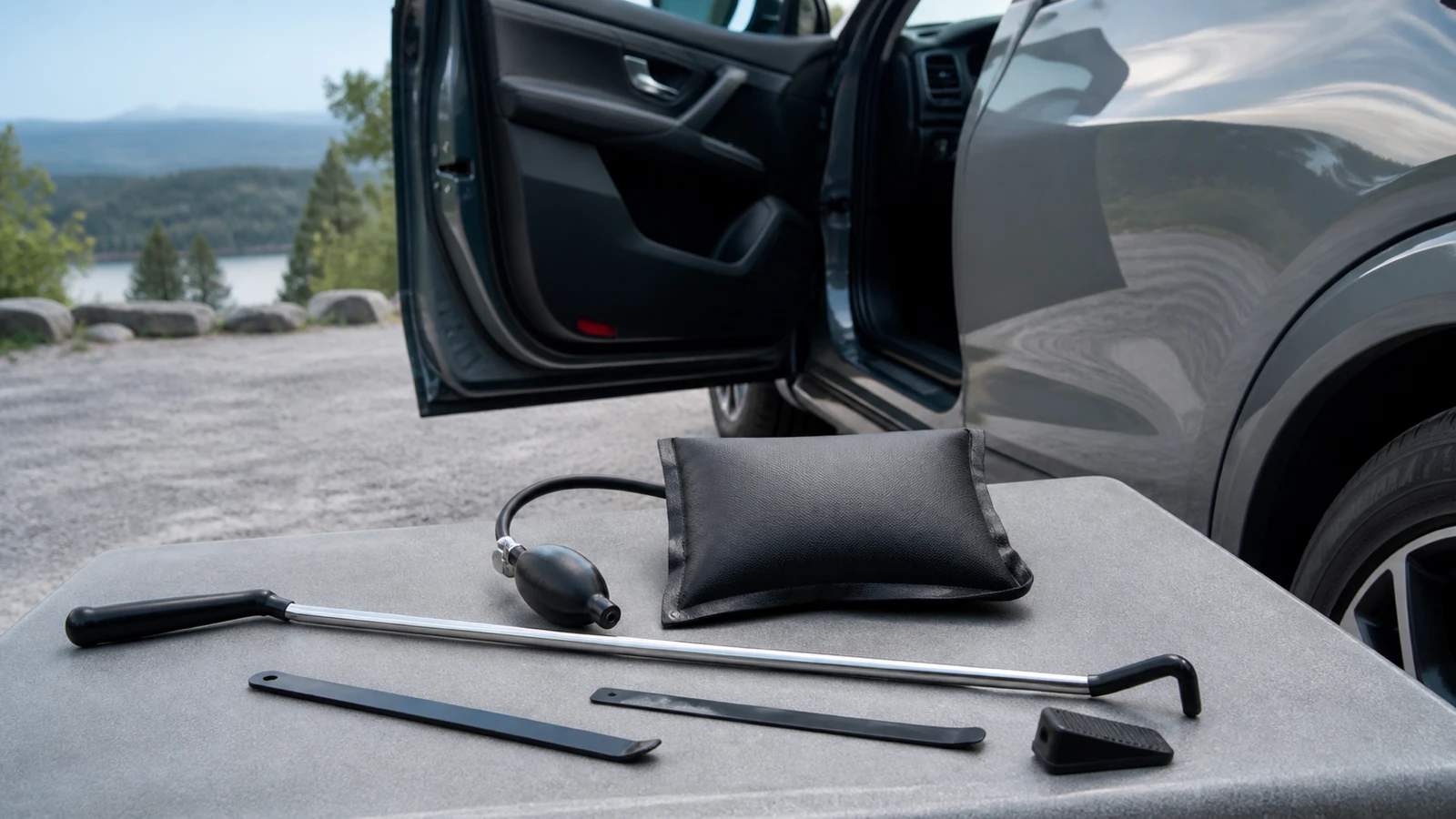
I almost bought a lockout kit at 11 p.m. in a grocery store parking lot, standing next to my locked car with the keys on the driver's seat. I had my phone out, three tabs open, and a cart page ready. What stopped me was not the price. It was that I could not tell if the five-star reviews were from real people or from the seller's cousin. So I went home on a spare key and spent the next evening doing what you are probably doing right now: hunting for unfiltered proof before spending money.
That is what this guide is for. You have read the product page. You do not fully trust it, which is healthy. Here is where people actually go to verify claims about car lockout kits, how to read what they find there, and how to know when you have enough to decide.
Where do skeptical buyers actually check first?
There is a loose pattern to how people verify a purchase like this, and it usually starts with the least polished sources first. That is not an accident. Polished sources are the ones the seller controls.
The typical path looks something like this. First stop is Reddit, because it feels unfiltered and searchable. You type the brand name plus "reddit" or the product category plus "reviews reddit" into Google, and you skim whatever threads come up. Second stop is a car forum or a trade forum, places where people who open cars for a living hang out. Third stop is a trust layer: the Better Business Bureau, a Google search for the brand name plus "legit" or "scam", and sometimes a check of whether any consumer agency has weighed in on the category.
A smaller group adds a fourth stop: asking a human. A coworker who does roadside work, a family member who is handy, a locksmith they already know. That conversation is underrated, and we will get to it.
Notice what is not on the list: the reviews section on the product page itself. Most skeptical shoppers treat on-site reviews as marketing until proven otherwise. The FTC has actually taken action on fake and paid reviews, including a formal rule on consumer reviews and testimonials (FTC trade regulation rule), which tells you how common the problem is. If a federal agency needed a rule about it, your suspicion is reasonable.
How do you read a reddit thread without getting played?
Reddit is useful, but it is not a courtroom. Threads about lockout kits tend to fall into a few buckets, and knowing the buckets saves you an hour.
Bucket one: the "locksmiths of Reddit, what do you carry" threads. These are gold. The people answering usually have no stake in which $30 kit you buy, and they will tell you plainly that an air wedge plus a long reach tool is the standard approach for a basic door gap job, and that slim jims on modern cars are a good way to shred a wiring harness. When a stranger with nothing to sell you describes the same tool sequence a product page describes, that is a real signal.
Bucket two: the "I locked my keys in my car, what do I do" threads. Read these for the stories, not the product links. You learn what actually goes wrong: broken weather strips from over-pumped wedges, scratched tint from bare metal rods, dead batteries that made the whole exercise pointless. Those failure stories are more useful than any five-star review because they tell you what to check in your own car before you rely on a kit.
Bucket three: brand-specific threads. Be careful here. A thread titled "is [brand] legit" with twelve replies posted in one afternoon, all from accounts with no other history, is not a review. It is a campaign. Real threads have arguments in them. People disagree, someone says the zipper on the bag failed in six months, someone else says theirs is fine after two years. Messy is good. Unanimous and fast is suspicious.
One more habit worth copying: check the age of accounts and the age of the thread. A kit that people reported using happily three winters ago has more evidence behind it than one with forty glowing comments from last week.
What does real user proof look like?
Real proof has texture. Marketing copy has adjectives. Once you see the difference, you cannot unsee it.
Real user evidence tends to include specifics that nobody would bother inventing: the make and year of the car, which door they worked on, how many pumps of the wedge it took, what the weather was doing, what went slightly wrong. "Used it on my 2014 Accord, took me about ten minutes the first time because I was scared of the paint, second time was maybe four" is what an honest report sounds like. It has friction in it.
Marketing copy sounds like this: "Works on all vehicles, opens your car in minutes, professional grade." No vehicle named, no time range with a learning curve, no mention of anything being hard. When every sentence is a superlative, you are reading an ad, wherever it is posted.
Here is a quick comparison you can apply to any source:
| Signal | Real user evidence | Marketing copy |
|---|---|---|
| Vehicle named | Yes, with year and model | "All cars" or nothing |
| Time claimed | A range, with a learning curve | "Minutes," "instantly" |
| Failure mentioned | At least one thing went wrong | Nothing ever goes wrong |
| Limits stated | "Didn't work on my buddy's BMW" | "Works on everything" |
| Tone | Bored, specific, slightly annoyed | Excited, urgent, glossy |
Apply this table to Reddit threads, forum posts, and on-site reviews alike. It travels well.
Also check the claims against physics. Any kit that promises to open "any car in two minutes" is promising something no honest seller would promise, because high-security locks and dead-battery edge cases exist. A claim you can verify is a claim with boundaries. Our own product page says the Sturvo 27 PCS car lockout kit fits common sedan, SUV, and truck door gap work and explicitly not every edge case. Hold every seller to that standard, including us.
Should you ask a locksmith or a coworker?
Yes, and most people skip this because it feels awkward. It should not. You are not asking for free labor, you are asking a thirty-second question.
The job-site version of this conversation happens constantly. Someone mentions they locked their keys in the truck, and within a minute three people are comparing notes: the guy who does roadside assistance on weekends, the one whose spouse locked the keys in with the dog inside, the one who keeps a wedge in the toolbox. If your workplace has a group chat, this is a perfect group chat question, because you get range. You will hear "my kit paid for itself the first time" and "I bent my door frame being impatient" in the same thread, and both are useful.
What to ask a coworker or friend: not "should I buy this kit" but "have you ever actually used one, and what would you do differently." The first question gets you an opinion. The second gets you experience.
What to ask a locksmith, if you have occasion to talk to one: "If a customer calls you for a simple lockout, what tool do you reach for first." You are not asking them to endorse a product. You are checking whether the tool category itself is real. It is. The air wedge and long reach sequence is standard practice, and you can see the same sequence described in our air wedge and long reach walkthrough. When a pro's answer matches the kit's method, the kit's core claim checks out.
What not to copy from a friend: their confidence. Your friend who popped his 2009 pickup in ninety seconds has a different door, a different seal, and a different lock than your 2022 crossover. His success is evidence the category works. It is not evidence it will be easy for you on day one.
Why are you researching this right now?
Worth asking yourself, because the answer changes what "verified" means for you.
If you are reading this in a parking lot with the keys visible on the seat, verification is a luxury you do not have tonight. Your decision tonight is locksmith, roadside, or spare key, and the typical U.S. locksmith visit runs about $50 to $150 depending on time and location. The kit research is for next week, so this does not happen to you twice. We have a full breakdown of that math in car lockout kit vs locksmith if you want it later.
If you are researching because of a trigger, name the trigger. Common ones: you just locked yourself out for the first time and felt helpless. You bought a new or used car and realized you have one fob and no spare. A road trip is coming. Winter is coming, and a frozen lock at 6 a.m. sounds miserable. You are about to spend money on the car anyway, on tires or detailing, and $33 of prevention fits in the same budget conversation.
The trigger matters because it tells you how much verification is enough. A parent buying a kit before a winter road trip with kids has a higher bar than a hobbyist who thinks the tools are neat. Both are fine reasons. They just deserve different amounts of homework.
One scenario where verification is not the point at all: if a child or pet is ever locked in a car in heat, you do not research anything. You call 911 first. Heat inside a parked car kills fast, and NHTSA's heatstroke campaign exists because it keeps happening. A kit is for planned readiness, never a reason to delay an emergency call.
Who actually pays for the kit?
This sounds like a odd question for a $33 item, but it comes up more than you would think, and it affects how you verify.
The simple case: you pay, you keep it in your trunk, done. Most buyers are this.
The work case: you drive a company vehicle or you are the person who gets the call when a coworker locks keys in a fleet van. Now the question is whether the kit is a personal purchase or a business expense. If it is a business expense, ask before you buy, not after. The question to ask your manager or admin is short: "If I expense a lockout kit for the work vehicles, which budget does it hit and do you want a receipt or a PO." Thirty-three dollars is below most approval thresholds, but the asking is the professional part. And if the company pays, verify differently: you care less about Reddit sentiment and more about whether the kit covers the actual vehicles in the fleet, which means checking door types, not reviews.
The gift case: a parent buying for a college kid, a spouse buying for the partner who loses everything. Here the verification question shifts from "does it work" to "will they actually keep it in the car." A kit in a closet at home opens nothing. The reviews worth reading are the ones that mention the storage bag living in the trunk for a year, because that is the behavior you are buying.
The reimbursement case: some roadside assistance plans and a few insurance add-ons reimburse locksmith calls. If that is your situation, check your policy documents or your membership terms before assuming a kit is redundant. Reimbursement usually means you pay the $50 to $150 up front and wait, which is a different experience than solving it yourself in ten minutes.
What does a one-evening verification pass look like?
Here is the whole process, the way I wish I had done it that first night instead of panic-scrolling.
- Search the brand name plus "reddit" and read the two or three messiest threads, not the cleanest. Note any failure stories and what caused them.
- Search the brand name plus "legit" or "scam" and check whether anything structural comes up: BBB complaints, pattern of billing issues, a seller that does not exist outside its own site. The Better Business Bureau is the fastest structural check in the U.S.
- Read one trade-flavored source: a locksmith forum thread, a towing company blog, anything from people who open cars for money. Confirm the tool category is real and the method matches what the kit teaches.
- Check the claims against the boundaries. Does the seller admit limits? Dead batteries, high-security locks, electronic-only systems? A seller with no listed limits is a seller with no credibility.
- Ask one human. Group chat, coworker, family. One real conversation beats twenty anonymous comments.
- Check the safety framing. Any seller whose content skips "only your own vehicle" and "child in heat means call 911 first" is telling you who they are.
Six steps, one evening, maybe ninety minutes if you go down a rabbit hole. After that, you are not researching anymore. You are stalling.
When do you stop researching and decide?
You stop when the remaining questions are ones only ownership can answer. No thread can tell you whether your specific door seal takes a wedge comfortably. No review can tell you whether you will practice at home or throw the bag in the trunk and forget it. Those are your variables, and they resolve with a dry run in your own driveway, not with more reading.
The decision itself is small. A typical locksmith visit costs more than the kit, so the break-even is one saved call. The risk of buying is $33 and some trunk space. The risk of not buying is standing in another parking lot at 11 p.m. doing math on your phone.
A few leftover questions people ask at this stage. Is Reddit biased? Sure, in both directions: people post when they are furious or delighted, rarely when things went fine. That is why you read for specifics, not sentiment. Are forum locksmiths just protecting their business? Sometimes you can smell turf defense, but most of them genuinely do not care whether you buy a $33 kit, because the calls they lose to kits were their least profitable calls anyway. Can you trust any on-site reviews? Treat them as a tiebreaker, never a foundation.
So the next move: do the six-step pass tonight, and skip the eleventh open tab. If the kit clears it, the Sturvo car lockout kit page shows exactly what is in the bag, and the locked keys in car guide covers your options for the lockout you might have before the kit even arrives. Verify once, buy once, practice once in the driveway, and let future-you enjoy the easiest ten minutes of their week.
Sources
Locked Out? Get Back In Yourself
The Sturvo 27 PCS Car Unlock Kit includes an inflatable air wedge, long reach tools, pry tools and a zippered carry bag — everything mentioned in this guide, for less than a single locksmith visit.
As an Amazon Associate we may earn from qualifying purchases.