
CarUnlockKit Reviews: Is It Legit? What to Check Before You Buy
Sturvo Editorial · August 23, 2026
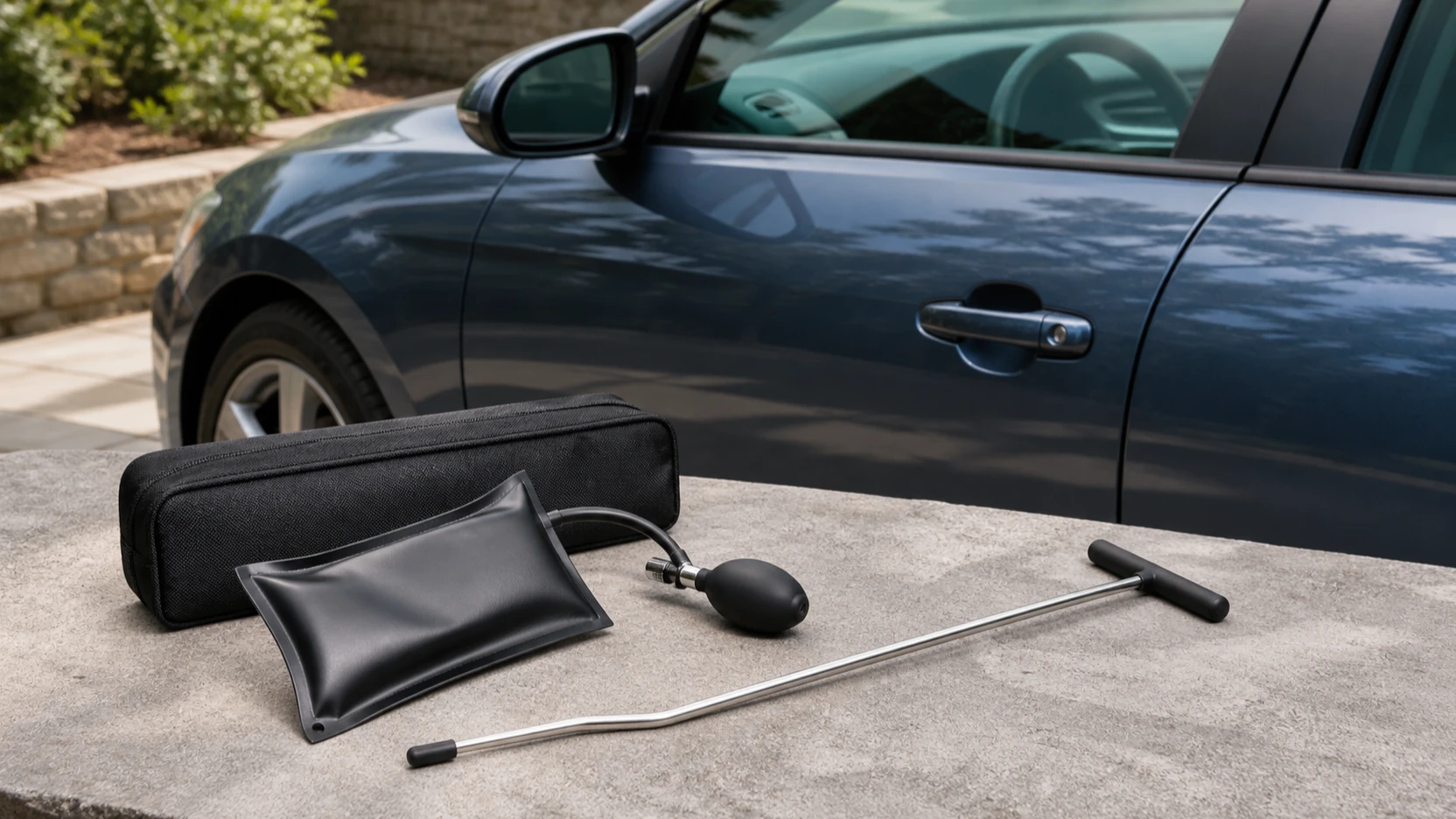
I locked my keys in my sedan in a grocery store lot last fall and paid a locksmith $95 for about four minutes of work. That same night I went looking for a lockout kit, found a few brands I had never heard of, and stopped cold at the checkout page. I did not buy. I opened a new tab and typed the brand name plus the word "reviews." If you just did that with CarUnlockKit, your instinct is right, and this page is the checklist I wish I had that night: how to verify a small brand, how to read its reviews without getting played, and exactly what we will and will not claim about the Sturvo kit sold here.
Why are you typing the brand name plus "reviews"?
That search is one of the most sensible things a buyer can do, and almost everyone does it right before handing over a card number. You are not really asking whether the product exists. You are asking three practical questions: will the thing actually arrive, will it work when I need it, and can I get my money back if it does not.
Small direct-to-consumer brands sit in an awkward spot. They are not Amazon, where the platform handles trust for you, and they are not a scam either, at least not automatically. A brand you have never heard of is just a brand you have not verified yet. The ten minutes you spend checking are the difference between a $33 tool that lives in your trunk for years and a $33 donation to a website that vanishes in March.
There is also a timing quirk worth knowing. Most people search for a lockout kit within 48 hours of a lockout, while they are still annoyed about the locksmith bill. That is a fine reason to buy, but it is also when you are most likely to skip the verification step and grab the first sponsored result. Slow down. The kit will still be there tomorrow, and the checklist below takes less time than the hold music at roadside assistance.
When does a lockout kit actually make sense to buy?
Before you verify the brand, verify that you need the product at all. Here is what the first ten minutes of a lockout usually look like, and where a kit fits.
You shut the door, hear the click, and see the keys on the seat. The right first moves cost nothing: try every other door, try the trunk or hatch, check whether a window is cracked open, and call whoever has the spare. If a child or a pet is inside the car, skip all of that and call 911 first. Heat builds inside a parked car faster than most people expect, and NHTSA's heatstroke campaign exists because kids die in cars that were "only going to be a minute." No tool purchase outranks that call, ever.
What people try next is where things go wrong. The coat hanger from the dry cleaner. The shoelace trick from a video shot on a 1998 sedan. A flathead screwdriver against the weather strip, which is how a free problem becomes a $400 paint and seal repair. If you want the full rundown of no-tool options, our locked keys in car guide covers them honestly, including which ones only work on cars old enough to vote.
A kit makes sense when the lockout is a pattern, not a fluke. A second lockout in a year. A long rural commute where a locksmith is an hour away on a good day. A teen driver who will absolutely do this at some point. A work truck that lives at job sites. In those cases, a $33 kit that sits in the trunk is cheap insurance. If this is your first lockout in a decade and you live two miles from a 24-hour locksmith, the honest answer is you might not need us.
What should you check on the brand site itself?
Start with the site you are already on, because a legitimate small brand leaves fingerprints. Here is what to look for, in the order I check it.
| What to check | What good looks like | Red flag |
|---|---|---|
| Contact page | Real email, physical address, a human answers | Only a web form, no address anywhere |
| Price honesty | One clear price, normal discounts | "Was $199, today $19" countdown timers |
| Shipping policy | Named timeframes and carriers in writing | "Ships fast!" with no numbers |
| Return policy | Days, conditions, who pays return shipping | "Satisfaction guaranteed" and nothing else |
| Product photos | Real photos of the actual kit and bag | Only renders, or photos stolen from other listings |
| Contents list | Every piece named and counted | "27 PCS!!" with no itemized list |
| Secure checkout | HTTPS, a normal card processor | Asks for a wire transfer or gift cards |
Run any brand through that table, including this one. Our product page lists all 27 pieces by name at what's inside the kit, and if any brand you are comparing cannot produce the same list, that tells you something.
One more site-level check: read the writing. Scam storefronts are usually assembled in an afternoon, and the text shows it. Broken English in the return policy, three different brand names on one page, a blog full of posts that say nothing. A real brand writes like it expects to still exist next year.
How do you read reviews without getting played?
Fake reviews are a big enough problem that the Federal Trade Commission finalized a rule in August 2024 banning the buying and selling of them, with civil penalties attached. You can read the announcement in the FTC's final rule on fake reviews and testimonials. The rule existing tells you the practice is common. Your job is to read around it.
The patterns are consistent once you know them. A burst of five-star reviews inside one week, then silence. Review text that could describe any product ever made: "Great product, works as described, fast shipping." No photos of the item out of the box. Reviewer profiles that reviewed eleven unrelated products on the same day. Any one of these is noise. Three of them together is a pattern.
The most useful reviews on any product are the three-star ones. Five-star reviewers are happy, one-star reviewers are furious, and three-star reviewers will tell you the truth: the wedge worked but the bag zipper is flimsy, the rods reached the button on a Civic but not on a Suburban. That is the texture of a real product with real limits, and it is what you actually need to decide.
Also weigh where the review lives. Reviews on the brand's own site are curated by definition, so treat them as a floor, not a verdict. Reviews on independent marketplaces and forums carry more weight because the brand cannot delete the bad ones. If a brand has only on-site reviews and zero footprint anywhere else, that absence is information too.
Who should you ask before you buy?
Reviews are strangers. You probably know people whose judgment on this specific purchase is worth more, and each of them gets part of it right and part of it wrong.
Your mechanic is the best call. They have watched tow drivers and roadside techs open cars for years, and they will tell you the truth: an air wedge and a long-reach rod are the standard tools of the trade, not gadgets. What they may get wrong is assuming you will practice. The tool is simple. Using it calmly at 11pm in a dark lot is a skill, and the skill comes from a dry run in your driveway, not from the instructions.
A locksmith gives you a more complicated answer. An honest one will admit that a basic door-gap lockout is the easiest money in their week, which is exactly why the kit math works. But remember their incentive: you buying a kit is them losing a $50 to $150 call. Listen to their technical advice and discount their purchasing advice accordingly. Our kit vs locksmith cost breakdown runs the numbers if you want them side by side.
Your spouse or partner asks the question nobody else will: are you actually going to practice with this, or is it going to live in the trunk unopened until the next lockout? That is a fair hit. Budget one dry run on a Saturday afternoon. Twenty minutes with the wedge and rod on your own driveway is the difference between owning a tool and owning a decoration.
Reddit and car forums are useful for one specific thing: failure stories. Search for the tool type plus "broke" or "didn't work" and you will learn which cars fight back, which rods flex too much, and which weather strips tear. What forums are bad at is brand verdicts, because half the glowing posts are affiliate links in a trench coat. Mine forums for failure modes, not for endorsements.
Where else can you verify a brand?
Beyond the site and the reviews, there are a few neutral places that know things the brand cannot edit.
The Better Business Bureau lets you look up a business and see complaint history, and more importantly, how the business responds. A company with a few complaints and thoughtful replies is normal. A company with complaints and silence, or no listing at all after years in business, deserves a second look.
Check the domain age with any free WHOIS lookup. A brand whose website is six weeks old but whose reviews go back three years has a math problem. Then run the two searches that surface what marketing hides: the brand name plus "scam," and the brand name plus "return." You are not looking for zero complaints, because every real business has some. You are looking for whether the complaints are about slow shipping (annoying, survivable) or about money taken and nothing shipped (walk away).
If you do get burned anywhere, your backstops are real. Pay by credit card, because chargebacks exist for exactly this situation, and the FTC's online shopping guidance explains your rights when an order never arrives. You can also report a fraudulent seller at ReportFraud.ftc.gov or the FBI's Internet Crime Complaint Center. Scam storefronts count on nobody bothering. Bother.
What do shipping and returns tell you?
At the $33 price point, the return policy matters more than the product photos, because this is exactly the price band where clone listings breed. Search any marketplace for "car lockout kit" and you will find $9 listings with photos lifted from better kits, shipping from nowhere, containing half the pieces in a plastic bag instead of a zippered case.
A real policy names the number of days, the condition the item must be in, and who pays return shipping. It has an address behind it. A fake one says "100% satisfaction guaranteed" and gives you no mechanism to claim it. Read the policy before you read the reviews, because the policy is the part that is legally yours.
Shipping tells a parallel story. A brand that names a timeframe, even a slow one, is running a real warehouse. A brand that promises nothing is often dropshipping, which means your "brand" is a spreadsheet that forwards your order to a factory you have never heard of. Dropshipping is not automatically a scam, but it does mean the brand cannot vouch for what is in the bag, and for a tool you will trust in an emergency, that matters.
What we claim about the sturvo kit, and what we will not
Since you came here to check us, here is our side of the table, in plain terms.
The Sturvo kit is 27 pieces: a hand-pump air wedge, modular long-reach rods with fittings, rubber sleeves, non-marring pry tools, and a zippered carry bag, about 2.45 pounds packed. It costs about $33 once, against a typical U.S. locksmith visit of $50 to $150, so it usually pays for itself the first time it saves you a call. It fits the common case: sedans, SUVs, and trucks where you can open a small door gap and reach an unlock button, handle, or lock post.
Here is what we will not claim, because nobody honestly can. It does not open any car in two minutes. It is not police endorsed or certified by anyone, and neither is any competitor's kit, no matter what their badge graphics say. It will not solve complex electronic locks or every dead-battery situation, and if a child or pet is trapped in a hot car, the kit is not the first move, 911 is. It is for vehicles you own or have permission to open, full stop. If your situation is past those limits, a locksmith is the right spend, and we would rather tell you that than sell you a tool that sits in the trunk feeling guilty.
Questions buyers still ask
Is it legal to own a lockout kit?
Yes. Owning the tools is legal everywhere in the U.S., the same way owning a slim jim or a set of lock picks is legal in most places. The legal line is use, not ownership: your own vehicles, or vehicles you have explicit permission to open. Using entry tools on someone else's car is a crime regardless of what you bought or where.
Will it work on my specific car?
Most sedans, SUVs, and trucks with a workable door gap and a reachable unlock button, handle, or lock post are the design case. The honest exceptions are high-security designs, some frameless windows, and dead-battery edge cases where the electronics you need to reach are unpowered. If your car is on that list, the kit is a backup, not a plan.
Why is it so much cheaper than a locksmith?
Because you are comparing a tool to a service. The locksmith's $50 to $150 covers a human driving to you at whatever hour you call. The kit is $33 of wedges, rods, and a bag that waits in your trunk. The trade is that you supply the labor and the practice, which is why the dry run matters more than the purchase.
So here is the next move: run whatever brand you are considering through the table above, read its three-star reviews, and check the return policy before the price. If that brand ends up being us, start with what's inside the Sturvo kit and plan one driveway practice session. Skip the 2am panic buy from a listing with no return address, no matter how good the countdown timer looks.
Sources
Locked Out? Get Back In Yourself
The Sturvo 27 PCS Car Unlock Kit includes an inflatable air wedge, long reach tools, pry tools and a zippered carry bag — everything mentioned in this guide, for less than a single locksmith visit.
As an Amazon Associate we may earn from qualifying purchases.