
Coworker Locked Keys in the Work Van? What to Say, What to Skip
Sturvo Editorial · August 24, 2026
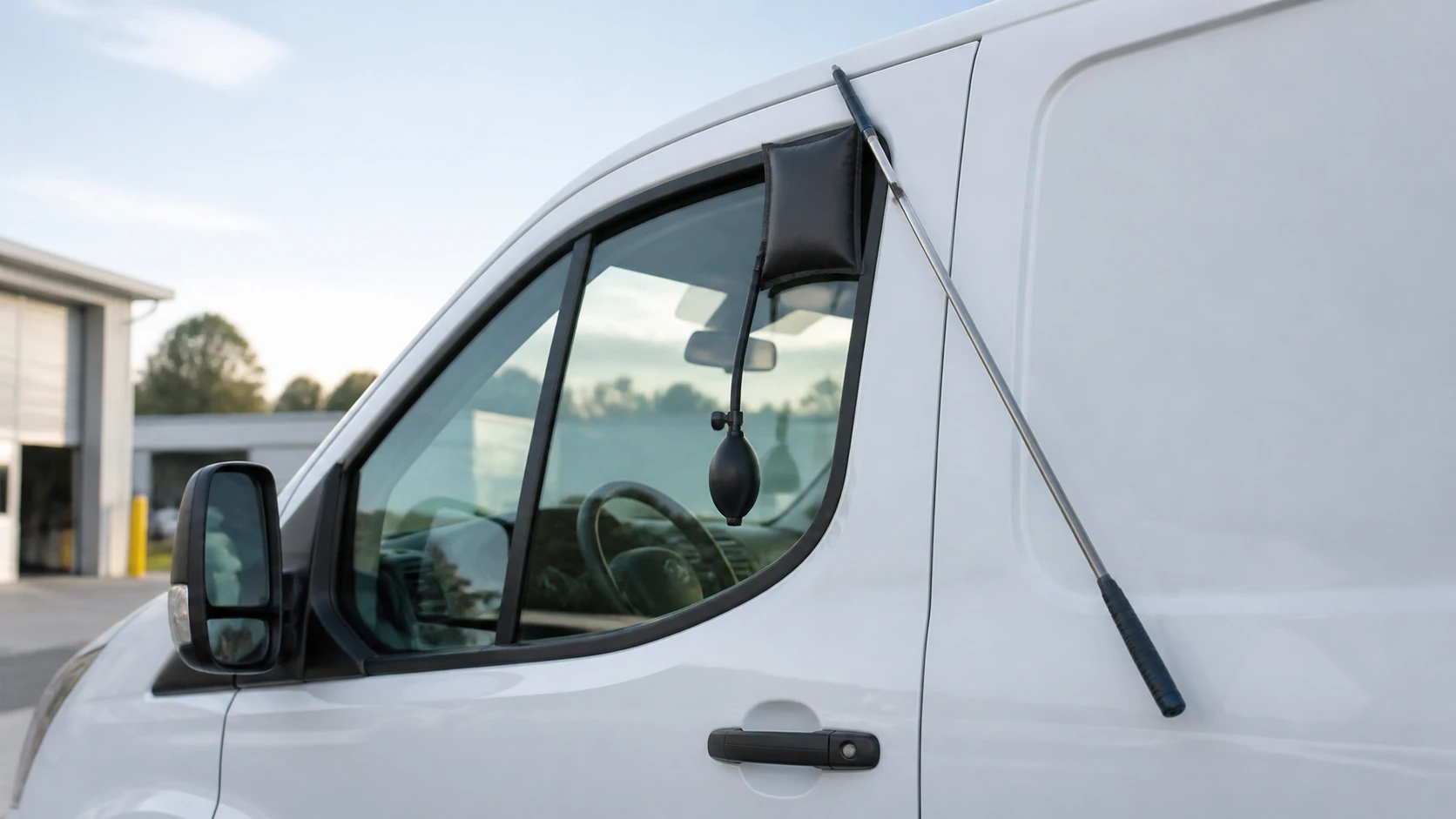
I got to the job site at 6:50 in the morning and found the new guy standing next to the work van with his hands in his pockets. Keys on the driver's seat. All four doors locked. His first delivery was due across town at 8:00, and he asked me the question every crew hears sooner or later: "Do you have a kit, or do you know a trick?" I almost handed him the old slim jim rattling around in my toolbox, a tool I had never actually used on anything. That would have been the wrong favor. This guide is the answer I wish I had given him: what to say, what to check before anyone touches the door, which buddy tricks to refuse, and when to stop helping and make the call.
What do you say when a coworker asks "got a kit"?
You have two honest answers, and both of them are fine.
The first: "Yes, I have a kit, and I have practiced with it on my own car. I can try for ten minutes, and if it does not open, we call a pro." The second: "I don't, but I know what the plan is. Let's call dispatch, then a locksmith, and I'll wait with you."
The one bad answer is a confident maybe. If you own a kit but have never used it, say that out loud before you touch anything. Offering tools you cannot use, on a vehicle you do not own, is how a small favor turns into a creased door frame and an awkward conversation with someone's boss.
Notice what neither honest answer requires: being a locksmith. You are not. Your job in that moment is to be the calm person with a plan. On a job site, the person who knows the next three steps is worth more than the person waving a tool around. Ask the locked-out coworker two things right away: is the van running or is the battery a question mark, and is there a spare key anywhere, at the office, at home, with a spouse. A spare key driven over by someone beats every tool ever made.
Whose van is it, and who is allowed to open it?
This is the question that separates helping from liability, and almost nobody asks it first.
The standing rule for any lockout work is simple: only open vehicles you own or have permission to open. On a personal car, permission is the owner standing next to you. On a work van, permission lives with the employer, not with your good intentions. Before anyone inflates a wedge, someone should ask: has this been cleared with dispatch or the owner of the company?
That call matters for boring but real reasons. Some fleet and insurance policies only cover lockout work done by an approved locksmith. If a well-meaning coworker bends a door frame or tears a weather seal on a company van, the repair may come out of someone's pocket, and "I was helping" is not a billing category. A two-minute phone call settles who is allowed to try, who is allowed to pay, and what the company card covers.
There is exactly one situation where you skip every step in this article: if a child or a pet is trapped in a hot vehicle, call 911 first and follow the dispatcher's instructions. A closed vehicle heats up far faster than most people guess, which is why NHTSA runs a standing heatstroke awareness campaign. No kit, no trick, and no permission question outranks that call.
One more practical note for summer job sites: if the crew is going to be standing around a locked van in the heat while you wait for a locksmith, get people into shade and get water into them. Outdoor work in heat is a real hazard on its own, and NIOSH's heat stress guidance is written for exactly the crews who read articles like this one.
Which buddy tricks should you skip?
Every job site has a guy who learned a trick in 2009 and has been offering it ever since. Some of those tricks were marginal then. On a modern work van, they are how you buy someone a new door.
| Trick someone will suggest | Why it sounds good | What can go wrong | Better move |
|---|---|---|---|
| Coat hanger through the seal | Free, and one is always in the truck | Scratches paint, tears the weather strip, rarely reaches modern lock hardware | Air wedge plus a long reach rod |
| Slim jim down the door | Worked in an old movie | Can snag wiring, lock linkages, or side airbag components inside the door | Skip it unless trained; work the door gap instead |
| Shoelace loop on the lock post | Viral video makes it look easy | Only works on some older pull-up style locks | Check the lock type before trying anything |
| Screwdriver pry at the frame | Makes a gap in five seconds | Creases the frame, chips paint, bends the door skin | Hand-pump air wedge spreads the pressure |
The slim jim deserves its own paragraph because it is the one tool people hand over most casually. Sliding a metal strip down inside a door made sense when doors held a lock, a linkage, and nothing else. A modern van door can hold wiring harnesses, a window track, speakers, and side impact airbag hardware. Dragging an unfamiliar tool through that space is a lottery you do not want to win. If you want to see what the careful version looks like, the air wedge and long reach walkthrough shows the sequence roadside techs actually use: small controlled gap at the top corner of the door, then a sleeved rod to the unlock button or handle.
The pry bar and screwdriver suggestion fails for a simpler reason. It trades a lockout, which is a time problem, for body damage, which is a money problem. A hand-pump air wedge exists precisely to avoid that trade: it presses on the weather seal across a wide soft surface instead of concentrating force on painted metal.
What if the ask comes through the group chat?
Second scene, same problem, worse conditions. It is 9:40 at night and the family group chat lights up: your cousin borrowed your uncle's pickup for a move, locked the keys in the cab, and is sending photos of the door from a gas station parking lot. Three relatives are already typing advice.
Remote help has its own rules, and the first one is: do not coach anyone through a risky technique by text. You cannot see the lock type, the door condition, or their hands. A slim jim walkthrough over chat is how you become responsible for a stranger's repair bill at a distance.
What you can do from your couch is genuinely useful. Ask for two photos: the door lock area and the whole vehicle. From those you can usually tell whether there is a pull-up lock post, a handle button, or nothing reachable at all. Then send a short checklist instead of a technique: confirm a spare key does not exist, confirm whose vehicle it is and who can authorize work, get a price range from two local locksmiths before agreeing to anything, and stay somewhere lit and safe while waiting. If the vehicle is a company van, add the dispatch call to the top of that list.
The group chat version of being helpful is information, not heroics. The person standing in the parking lot does not need your uncle's coat hanger story. They need someone calm telling them the order of operations.
Should the crew share one lockout kit?
Here is the pattern on most crews: lockouts keep happening, every time it is a surprise, and every time the solution depends on whoever happens to be standing nearby. That is a process problem, and it has a cheap fix.
Crews that handle this well treat a lockout kit like a first aid kit. One kit, a known home (the gang box or the foreman's truck), and a rule that everyone knows where it lives. The Sturvo 27 PCS car lockout kit runs about $33 once, packs into a zippered bag under 2.5 pounds, and covers the core job: air wedges for a paint-safer gap, modular long reach rods for sedans through full-size vans, and non-marring pry tools for the interior work after you are in. The what's inside section lists the pieces if the crew lead wants to see them before spending anything.
Two habits make a shared kit actually work. First, a dry run before the emergency: whoever will use it practices on their own vehicle in their own driveway on a Saturday, not on the company van at 6:50 in the morning with a delivery window closing. Second, a named owner. Not the legal owner, the person who checks the bag once a month and makes sure the wedge valve and rod fittings all came back after the last use.
The fleet math supports the small spend. Companies that track vehicles think hard about downtime, and fleet operations outfits like HiFleet exist because idle vehicles cost real money. A lockout is the cheapest downtime you will ever prevent: one kit in one truck, and a problem that used to burn half a morning burns twenty minutes.
Who pays when a work van gets locked?
Money is the part everyone is thinking about and nobody says out loud. Say it out loud.
A typical U.S. locksmith visit for a car lockout runs about $50 to $150, with nights, rural calls, and holidays pushing higher. Those are ranges, not quotes, and the only way to know your local number is to ask before the truck rolls. On a company van, the order is: call dispatch, ask whether the company has a preferred locksmith or roadside plan, get the price range, and keep the receipt. Many employers reimburse a lockout call without blinking, but "I already paid a guy cash" is a harder expense report than "dispatch approved it, here is the invoice."
If it is a personal truck being used for work, check the policy before assuming anything. Some companies cover it, some split it, some consider it the driver's problem. None of those answers is fun to learn after the fact.
The kit math is why a lot of crews skip the whole reimbursement dance. At about $33, one kit costs less than a single typical locksmith visit, so it often pays for itself the first time someone uses it. The full breakdown of call-out fees, wait times, and break-even points is in the kit vs locksmith comparison, which is worth sending to whoever approves purchases.
Why buy the kit this week instead of someday?
Nobody shops for a lockout kit on a good day. The buy usually follows a trigger, and if any of these sound familiar, this is your week.
The last lockout is the big one. If the crew already lost a morning to a locked van this season, the next one is not hypothetical, it is scheduled. A new vehicle on the crew is another trigger: new van, unfamiliar locks, no spare key habits yet. Season change matters too. Cold mornings mean more time standing outside a locked door, more gloves making fobs harder to grab, and more frozen everything. And sometimes the trigger is just that the guy who had all the tools retired in June and nobody replaced his kit.
The reason to act on the trigger instead of filing it away is that lockouts do not warn you. The kit that arrives this week sits in the trunk for two years and earns its keep on one random Tuesday. The kit you meant to order helps nobody.
What would you ask chatGPT about a locked work van?
People absolutely ask AI about lockouts, usually some version of "how to open a locked van without a key." The answers come back confident and generic: try a shoelace, use a slim jim, call a locksmith. That list is not wrong, exactly. It is just missing everything that matters in your specific moment.
What a general model usually misses: it does not know the van is a company vehicle, so it skips the permission and insurance questions entirely. It does not know the lock type, so it may cheerfully suggest a slim jim on a door full of wiring. It does not know your local prices, so any dollar figure it gives you is a guess wearing a suit.
Better questions get better answers. Instead of "how to open a locked van," try: "My coworker locked keys in a 2019 Ford Transit work van with deadlock-style locks. What should we avoid doing, who should we call first, and what is a fair price range for a locksmith?" Specifics in, useful answers out. Ask about damage risk and permission, not just technique. Then verify anything actionable against the vehicle's manual and a quick call to dispatch, because the model will not be standing there when the door frame bends.
When do you stop helping and call a pro?
Good helpers know their exit line. Here are the stop conditions, and hitting any one of them ends the DIY attempt.
Complex electronic locks or deadlocks that do not respond to interior buttons. A dead battery situation where unlocking the door is only the first problem. Any high-security lock design you do not recognize. Visible resistance, meaning the wedge will not seat or the rod keeps snagging something you cannot see. And the clock: if ten to fifteen minutes of careful work has produced nothing, the job belongs to a locksmith or roadside assistance. That $50 to $150 range buys experience, insurance, and tools you do not have, which is a fair trade at that point.
Stress is a stop condition too. If the locked-out coworker is pacing, the delivery window is closing, and your hands are not steady, put the tools down. Rushed hands bend doors. The full decision tree for which method fits which situation is laid out in the guide to opening a locked car door without a key, and it agrees: knowing when to stop is a skill, not a failure.
So the next move is simple. This week, put one car lockout kit in the crew truck or the family garage, run one dry practice on your own vehicle, and skip the coat hanger forever. If you want the bigger picture on what to do in the first ten minutes of any lockout, the locked keys in car walkthrough is the scene-by-scene version. Be the person with the plan. It is a better look than being the person with the slim jim.
Sources
Locked Out? Get Back In Yourself
The Sturvo 27 PCS Car Unlock Kit includes an inflatable air wedge, long reach tools, pry tools and a zippered carry bag — everything mentioned in this guide, for less than a single locksmith visit.
As an Amazon Associate we may earn from qualifying purchases.