
Keyless Car Locked Out With a Dead Fob: What You Can Do
Sturvo Editorial · August 26, 2026
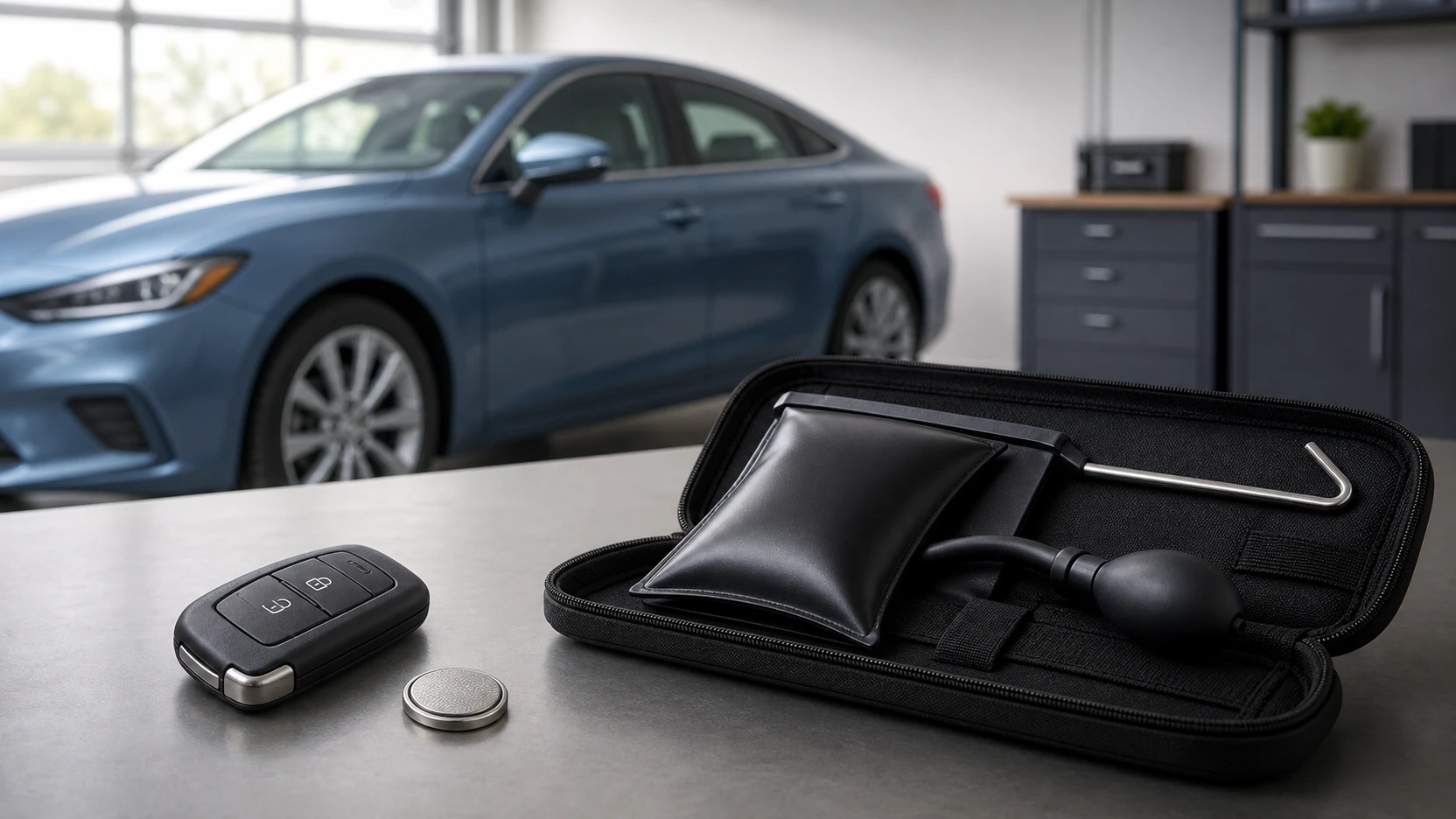
I bought the car partly so this could never happen. Push-button start, doors that unlock when I walk up, an app on my phone. Then, at a rest stop off I-80 with forty minutes of daylight left, the fob went dark. No unlock chirp, no door pull, nothing. I stood there pressing the button like it was a TV remote with attitude. I almost called a tow before I remembered there was a metal key hiding inside the fob itself.
If you drive a keyless car, this post is the version of that evening you get to rehearse in advance. You will learn why keyless entry does not actually prevent lockouts, where manufacturers hide the backup keyhole, how to tell a dead fob from a dead car battery, and why this specific week, the one where you just realized all this, is the right time to spend a small amount of money on being ready.
Keyless entry was supposed to end lockouts. what happened?
The pitch was simple: no key, no lockout. The car senses the fob, the door opens, you drive away. And for years it works exactly like that, which is precisely the problem. Keyless systems train you to stop thinking about keys at all.
Under the convenience, the fob is a small radio transmitter running on a coin cell battery. When that battery dies, the car cannot see you. The flush door handles stay flush. The button on the handle does nothing. On many vehicles, the walk-away auto-lock feature keeps working on the car's side even as the fob fades, because the car locks based on the last good signal it received. So the failure mode is rude: the car happily locks itself, and only later do you discover the fob can no longer ask it to open back up.
There is a second trap. A weak fob left inside the car may fall below the threshold the car uses to detect it. Some vehicles will then lock with the fob sitting on the seat, convinced the cabin is empty. You come back from paying for gas and your keyless car has locked your keyless key inside. The technology did not remove the lockout. It moved the lockout behind a battery you never think about.
Coin cells in fobs typically last a few years, and many cars give little or no warning before the end. Some dashboards flash a low-fob-battery message once and never again. If you missed that message, your first symptom is a locked door in a parking lot.
Why is this a this-week problem and not a someday problem?
Here is the buyer moment honestly stated: you are reading this because something already happened. Maybe the fob died once and you got lucky with a spare. Maybe you just bought a new car and realized you have no idea where the keyhole is. Maybe winter is coming, and cold weather is hard on coin cells, and you commute before sunrise.
The math is the argument. A typical U.S. locksmith visit for a car lockout runs about $50 to $150, more at night, on holidays, or outside the city. A replacement coin cell costs a few dollars at any pharmacy. A trunk-ready car lockout kit like the Sturvo 27 PCS set runs about $33 once. The expensive outcome is not the kit. The expensive outcome is the evening where none of these small things are done and you are paying emergency rates for a problem that took the universe three years to schedule.
The reason people delay is that keyless cars feel finished. There is no key ritual, so there is no maintenance ritual. Nobody ever handed you the fob and said, replace this battery every two years and practice the backup entry once. So the prep never happens until the failure does it for you.
Treat the first dead-fob scare as the invoice you almost got. That is the why-now. Not general preparedness, not a bunker mentality. One specific, recently demonstrated failure, fixed with one specific, cheap afternoon.
Where did they hide the keyhole?
Almost every keyless fob contains a mechanical key blade, and almost every keyless car still has a lock cylinder somewhere. The industry just got shy about showing them.
The usual hiding spots:
- The key blade: look for a small release button or slide on the back or side of the fob. Press it and pull, and a metal blade slides out of the housing.
- The door cylinder: on many sedans and SUVs, the cylinder sits under a small plastic cap at the rear edge of the driver's door handle. You pop the cap with the blade tip or a fingernail, and there is a normal keyhole underneath.
- The trunk or a single door: some vehicles put the only cylinder in the trunk lid or only on the driver's side.
- Nowhere: a smaller number of vehicles have no external cylinder at all. For those, the backup plan is electrical, not mechanical, and you need to know that before the battery dies, not after.
Two things to expect. First, opening the door with the mechanical key may set off the alarm, because the car thinks it is being entered without the fob. That is normal and loud and embarrassing, and it stops once the car recognizes the fob inside. Second, most push-button cars can start with a dead fob if you hold the fob directly against the start button or a marked spot on the steering column. There is a passive backup coil there that reads the fob at zero range. Outlets like Car and Driver have covered this backup-start trick for years, and your owner's manual shows the exact spot for your trim.
Do the dry run this weekend, in your driveway, with the spare fob nearby. Find the blade. Pop the cap. Turn the key. Hold the dead fob to the start button. Five minutes, and the rest-stop version of you stops being a mystery.
Is it the fob or the car battery?
These two failures feel identical from outside the car and need completely different responses. Before you assume the fob died, run the checklist.
| What you observe | Likely cause | What actually works |
|---|---|---|
| Doors dead, but dash lights up once you are in | Dead fob battery | Mechanical blade, backup start at the button, spare fob |
| No dash lights, no dome light, total silence | Dead 12V car battery | Mechanical key still opens the door, but nothing starts; you need a jump or a pro |
| One door works, others do not | Wiring or actuator issue | Not a fob problem; stop DIY and call a shop |
| Fob works intermittently, worse in cold | Weak coin cell | Replace the cell this week, not after it fails |
| Car locked itself with fob inside | Fob below detection threshold | Spare fob, or a door-gap tool to reach the unlock button |
The row that matters for this post is the last one. When the fob is inside and the car has locked, the mechanical blade in your pocket fob does not help because your pocket fob is the one on the seat. This is the scenario where a door-gap approach earns its keep: an air wedge opens a finger-width gap at the top corner of the door, and a long-reach rod presses the unlock button. The full sequence is in our air wedge and long reach guide, and the broader method menu is in Locked Keys in Car.
The dead-12V row is the one where you slow down. If the car battery is dead, unlocking the door is only step one of a longer problem, and forcing anything while stressed is how weather strips tear.
Who actually pays for a keyless lockout?
The check-writer changes what smart prep looks like, so it is worth thirty seconds of honesty about your situation.
If it is your personal car, you pay, and the comparison is simple: one locksmith visit often costs more than the kit, which is the whole argument in car lockout kit vs locksmith. Break-even on the first save, everything after that is profit.
If you drive a company or fleet vehicle, the calculus shifts. Many employers reimburse roadside calls but require a receipt and a preferred vendor, and some fleet policies flatly prohibit employees from attempting entry themselves. Ask your fleet manager two questions before anything happens: which roadside number do I call, and am I allowed to do anything myself? A $33 kit that violates policy is not a savings, it is a write-up.
If you have roadside coverage through insurance, a credit card, or an auto club, the lockout call may already be paid for, and your real cost is the wait, often 30 to 60 minutes, longer at night. In that case the kit is not about money at all. It is about not standing in a rest-stop lot for an hour.
And there is the gift scenario, which is more common than the industry admits: a parent buying for a new grad with a first keyless car. That buyer is not afraid for themselves. They are afraid of the 11 pm phone call. A kit, a spare coin cell taped to the registration, and one driveway dry run is a complete answer to that fear.
What would you ask chatGPT at 11 pm in a parking lot?
People do ask. The queries look like "keyless car locked out dead fob" and "how to open push start car when fob dies." The answers that come back are usually directionally right and specifically useless, and it helps to know where the gap is.
What the model typically gets right: the fob has a hidden blade, the car has a hidden cylinder, holding the fob to the start button usually works. That is the generic layer, and it is fine.
What it typically misses:
- Your exact trim. Cylinder location varies by model year and sometimes by trim package. A general answer cannot tell you whether your cap pops from the front or the back edge.
- Whether your car has walk-away auto-lock enabled, which changes how you got locked out in the first place.
- The alarm behavior on mechanical entry for your specific vehicle, so you are not startled into doing something hasty while it blares.
- Whether your model has no external cylinder at all, which flips the whole plan.
Better questions to type: "where is the emergency key cylinder on a 2024 [your make and model]", "how to start [your model] with a dead key fob", "does [your model] lock with the fob inside." Then verify the answers against the owner's manual PDF, which is free from the manufacturer's site and is the only source that is actually about your car. AI is a decent index. The manual is the document.
When do you stop and call someone?
Two hard stops, no exceptions.
First, if a child or a pet is locked inside and heat is even remotely a factor, call 911 before you touch a tool. Vehicle interiors heat faster than most people expect, and the NHTSA heatstroke campaign and Kids and Car Safety both exist because these situations turn in minutes. A lockout kit must never delay that call.
Second, know the mechanical limits. Stop and call a locksmith or roadside when the vehicle has no external cylinder and the 12V situation is unclear, when the lock is a high-security design you do not recognize, or when you have made two careful attempts and something feels wrong. Bent door frames and torn weather strips cost more than the visit you were trying to avoid.
One legal line that should not need saying but does: these tools and techniques are for vehicles you own or have explicit permission to open. Full stop. Vehicle theft is a real enforcement category, and NHTSA's vehicle theft prevention guidance is a reminder of why bystanders and police take improvised entry seriously. Carry your registration, expect questions, and never practice on a car that is not yours.
Will you buy any of this twice?
Honest answer: parts of it, yes, and that is normal.
The coin cell is a consumable. Plan on replacing fob batteries every couple of years, sooner if the fob lives in a cold garage or a hot car. Buy the two-pack, because the second fob in the household is aging on the same schedule.
The kit itself mostly lasts, but individual pieces take wear. Air wedge valves can get cranky after years of trunk temperature swings. Rod tips and rubber sleeves scuff. The realistic repurchase pattern is not a whole new kit every year. It is replacing a wedge or a sleeve set after heavy use, or buying a second kit when the household adds a second car, because the kit that lives in the sedan does nothing for the truck at the trailhead.
The other quiet repurchase is the gift. People who got bailed out by their own kit tend to buy the next one for someone else: the kid with the first car, the spouse who laughed at the trunk bag until the night it worked. That is the best evidence the category has, and no marketing department invented it.
What you should not do is replace things on a schedule out of anxiety. Inspect once a season: pump the wedge, check the valve, make sure the rod sections thread cleanly, confirm the coin cell in the fob. Replace what fails inspection, keep what does not.
Sources
Tonight, do the five-minute version: pop the fob open, find the blade, find the cap on the door handle, and put a spare coin cell in the glove box. Skip the coat hanger and the YouTube shortcut video. If you want the door-gap option ready for the day the fob is locked inside, the Sturvo 27 PCS car lockout kit covers the wedge-and-reach method, and the step-by-step tool guide shows the sequence before you ever need it.
Locked Out? Get Back In Yourself
The Sturvo 27 PCS Car Unlock Kit includes an inflatable air wedge, long reach tools, pry tools and a zippered carry bag — everything mentioned in this guide, for less than a single locksmith visit.
As an Amazon Associate we may earn from qualifying purchases.